Towards new horizons
The closure of numerous programmes in the Sahel region was accompanied by a geographical repositioning of Luxembourg Development Cooperation and, consequently, a refocusing of LuxDev’s activities on the field. From Southeast Asia to Central America via West Africa, the Agency has established new footholds across three of the continents where it operates. As a result, 2025 was marked by the consolidation of new partnerships and the launch of initial actions laying the foundations for sustainable cooperation.
Cambodia, new country of operation
Gallery viewer

A new chapter opened in Southeast Asia with the signing of a general cooperation agreement between Luxembourg and Cambodia in April 2025. Bordering Laos and Vietnam, where LuxDev is already active, the country is facing growing social and economic inequalities. Access to decent employment, social protection, and basic public services remains unevenly distributed, and women’s participation in economic and political life is still limited despite efforts to raise awareness and implement reforms. The effects of climate change, combined with rapid urbanisation and fragile environmental management, are increasing the vulnerability of populations.
Improving public services and strengthening local governance
LuxDev’s first project in Cambodia was part of a Team Europe approach, through a contribution to the Improved service delivery programme, co-financed by Germany and Switzerland and implemented by GIZ. This partnership, supported by EUR 800,000 in funding from Luxembourg, helped to improve the quality of local public services in the sectors of waste management, water, health and administrative services.
The programme also helped to strengthen decentralisation, support the digitalisation of services and promote women’s participation in decision-making roles. For example, a training on leadership and inclusion has been introduced to address the persistent absence of women in leading positions within sub-national administrations. In addition to being underrepresented, women have limited access to capacity-building opportunities, face lower levels of confidence and have few opportunities to influence decision-making. Over 9 months, the initiative enabled 226 women to enhance their ability to contribute actively to local governance. Furthermore, updated materials on gender equality, social equity, and inclusion were developed in collaboration with the relevant ministries and shared with the National School of Local Administration to ensure the long-term integration of gender-sensitive leadership training into national systems.
Building on the successful cooperation established between all partners, a second phase of this programme was launched in December 2025 to continue improving the services provided to Cambodian citizens.


Towards strengthening the health system in remote provinces
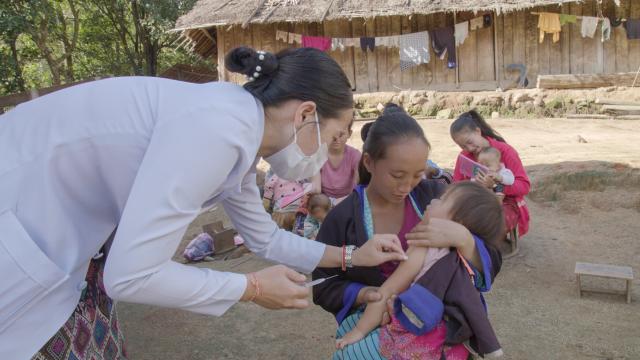
In addition, a new programme focusing on public health and hospital services in the Northeastern provinces of Cambodia was formulated in 2025. It targets the rehabilitation of facilities in the remote provinces of Stung Treng and Ratanakiri by providing essential medical equipment.
It also supports the training of medical staff and the modernisation of blood transfusion and cold chain systems in order to ensure safer treatment for the approximately 382,000 inhabitants of the region, focusing particularly mothers, newborns and those requiring emergency care.
At the same time, the programme helps provincial health authorities to better plan, manage and coordinate services, integrate digital solutions, as well as establish systems that are gender-sensitive and resilient to climate change.
-
In formulation Cambodia
Public health and hospital services in the northeastern provinces of Cambodia
Health

Togo, from formulation to initial results
The year 2025 was also marked by the formulation and launch of new projects and programmes in Togo, a country that was added to LuxDev’s list of regions of intervention following the signing of a general cooperation agreement with Luxembourg in 2024. This agreement aims to align the efforts of both countries with Togo’s development priorities, in a context where, despite sustained economic growth, poverty, unemployment, and youth underemployment remain high, particularly in rural areas. Deforestation is also a major challenge for the country, as is national stability, which is threatened by armed groups in the north.
In this context, Luxembourg Development Cooperation is active in several strategic sectors: technical education and vocational training, the environment and the fight against climate change, as well as digitalisation. Good governance has also been identified as a cross-cutting priority, aimed at strengthening institutional capacities, sectoral planning and coordination, as well as the transparency and efficiency of public action.
Concrete initial results in the forestry and digital sectors
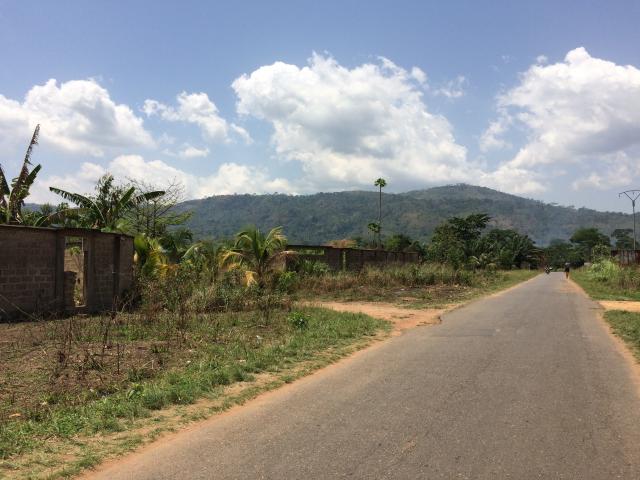
LuxDev’s portfolio in Togo includes two projects delegated to GIZ that already delivered tangible results in 2025. Thanks to the Scaling up forest landscape restoration in Togo (Forests4Future) project, 1,814 hectares of forest were restored, 1,913 households increased their income from forest or productive landscape management by an average of 10%, and 3 out of the 6 planned municipal development plans already incorporate forest landscape restoration measures.
As for the Digital transformation of the Togolese economy (ProDigiT) project, it contributed to equipping the Togo Data Lab, which aims to position the country as a regional hub for data-driven innovation. It also supported the establishment of the Start fund, dedicated to innovative start-ups, and the creation of the Togotech association, which promotes the development of start-up support services and the inclusion of women in the tech sector.
-
In execution Togo
Scaling up forest landscape restoration in Togo (Forests4Future)
Agriculture, forestry and fishery
Scaling up forest landscape restoration in Togo (Forests4Future) -

In execution Togo
Strengthening cybersecurity in Togo (TogoCyber+)
Digitalisation and ICT
Strengthening cybersecurity in Togo (TogoCyber+)


Structural projects to support the country’s transformation
Meanwhile, the Agency formulated three projects which it will be responsible for implementing from 2026 onwards.
In response to the challenges identified in the education sector, the Science, technology and education for leadership from Lomé for Africa (STELLA) project aims to modernise the École polytechnique de Lomé in order to train engineers capable of supporting the country’s economic and technological transformation. It will introduce vocational courses that are inclusive and aligned with market needs, while strengthening governance, applied research and career integration, with a focus on the inclusion of young women.

Gallery viewer


The Strengthening cybersecurity in Togo (TogoCyber+) programme will help to secure critical digital infrastructure. It supports the creation of the Africa Cyber Hub, a regional centre dedicated to cyber-resilience that promotes cooperation, research, innovation and the development of technical skills.
Co-funded by Luxembourg and the European Union, the Initiative for local growth, responsible resource use and the balance of protected ecosystems (INCLURE) tackles environmental challenges. It aims the effective management of protected areas enhancing ecosystem services, the development of an inclusive green economy driven by local communities, strengthened territorial governance of waste management and sanitation in regional capitals, as well as improved sectoral oversight by the relevant local authorities and administrations.
-
Did you know?
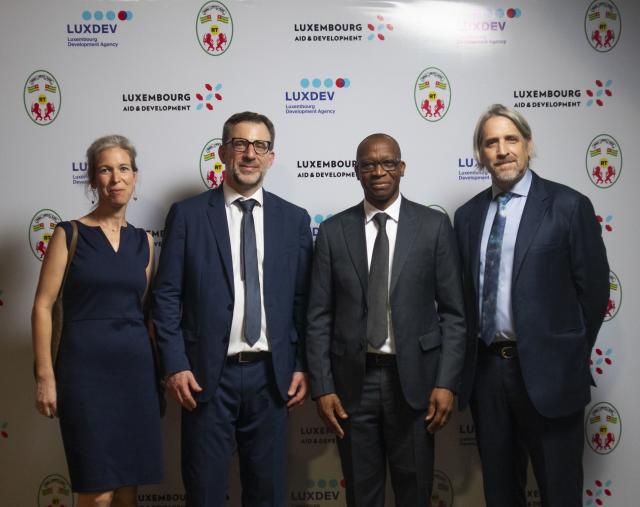
LuxDev, which had previously been operating in Togo from its office in Benin, obtained a headquarters agreement from the Togolese government on 3 November 2025. The implementation teams, which are gradually being formed, are progressively setting up in Lomé. Furthermore, the signing of the first Togo-Luxembourg Indicative Cooperation Programme is scheduled for July 2026, marking a strategic milestone for Luxembourg Development Cooperation engagement in Togo.

Latin America, emergence of a regional dynamic
With no fewer than 3 projects under formulation and 7 others in the launch phase among the 13 interventions managed from San José, LuxDev’s activities in Costa Rica in particular and in Latin America in general truly took off in 2025, following the ratification, at the end of the previous year, of the framework agreement governing the new cooperation relations between the Luxembourg and Costa Rican governments.
Interventions tailored to transnational challenges
The Luxembourg Development Cooperation’s engagement in the region is part of a dynamic of strategic adaptation following the closure of its activities in Nicaragua in July 2023, and is based on the ambition to develop regional interventions in order to effectively address transnational issues.
Indeed, Latin America is facing multifaceted challenges: migratory pressure, persistent gender inequalities, growing socio-economic vulnerability, high exposure to the impacts of climate change, and digital gaps limiting access to opportunities.
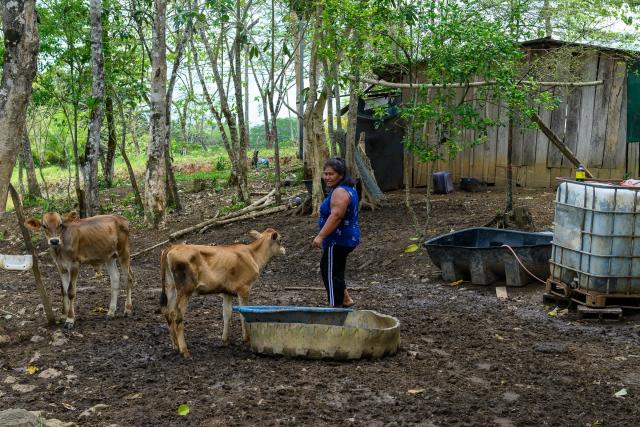
In Costa Rica, LuxDev’s interventions support the integration of migrants, the digital modernisation of the State, public-sector innovation, support for South-South and triangular cooperation, and the development of a sustainable circular and forestry-based economy.
-
In execution Costa Rica
CONVIVE - Migration, social cohesion, economic integration and governance
Governance
CONVIVE - Migration, social cohesion, economic integration and governance -

In execution Costa Rica
COOPERA - Support for South-South and triangular cooperation
Others
COOPERA - Support for South-South and triangular cooperation -

In execution Costa Rica
CONECTA - Digital governance and geospatial data
Digitalisation and ICT
CONECTA - Digital governance and geospatial data


In El Salvador, projects accompany national efforts to strengthen the economic inclusion of young people, accelerate digitalisation, and improve international cooperation through South-South and triangular cooperation mechanisms.

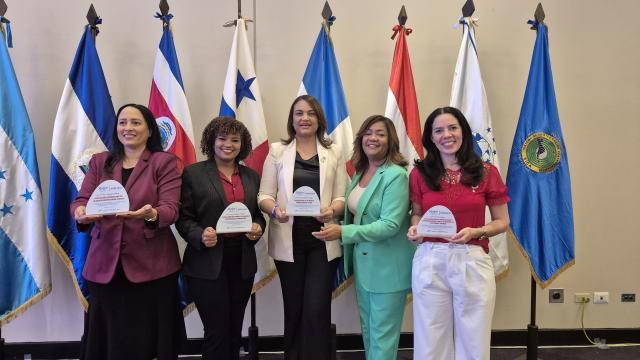
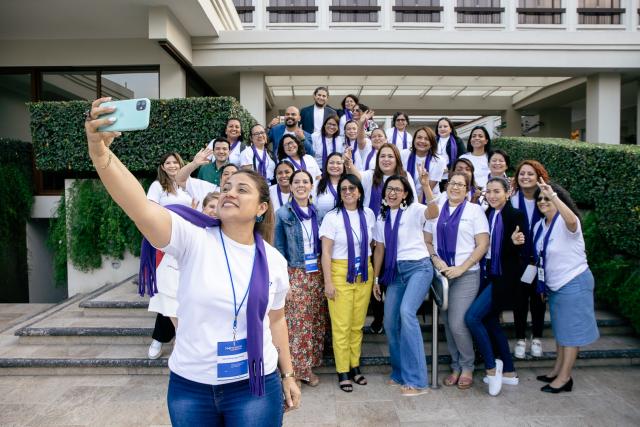
At the regional level, women’s entrepreneurship programmes focus on the economic empowerment and financial inclusion of women, as well as the strengthening of MSME ecosystems, helping to combat gender inequalities and boost competitiveness, economic empowerment and social cohesion.
-
Closed Latin America and the Caribbean
Regional Programme for the Promotion of Women's Entrepreneurship - Phase II
Socio-economic development
Regional Programme for the Promotion of Women's Entrepreneurship - Phase II -

In execution Latin America and the Caribbean
Regional programme for strengthening women's entrepreneurship - Phase III
Education, vocational training and employment
Regional programme for strengthening women's entrepreneurship - Phase III -
In execution Latin America and the Caribbean
Contribution to the Female Entrepreneurship Fund (FEF)
Impact finance
Contribution to the Female Entrepreneurship Fund (FEF) -

In execution Latin America and the Caribbean
Female Entrepreneurship Fund - Technical Assistance Facility
Impact finance
Female Entrepreneurship Fund - Technical Assistance Facility


A scaling-up of activities and partnerships
The formulation of many of these initiatives was finalised in 2025. Project teams were established, governance mechanisms were strengthened, and partnership agreements were signed with regional institutions, paving the way for a significant increase in disbursements in 2026 and a consolidation of the Agency’s position as a key player in development cooperation in Latin America.
-
Key moment
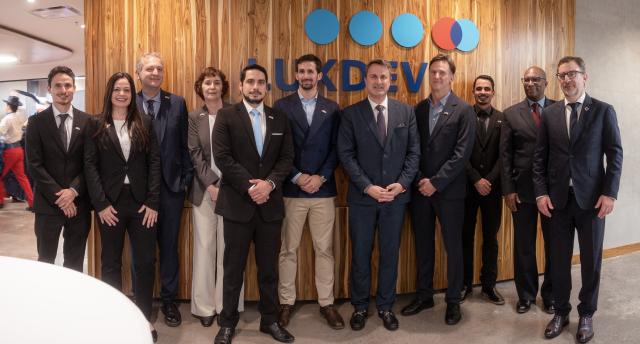
In mid-November, the Embassy of Luxembourg and LuxDev’s regional office in San José were officially inaugurated by Minister for Development Cooperation and Humanitarian Affairs, Xavier BETTEL, in the presence of Costa Rican Minister for Foreign Affairs and Worship, Arnoldo André TINOCO, and all the Agency’s staff based in Costa Rica. As a regional hub, this office plays a central role in the management of projects carried out in Latin America.
