New fruit species planted for the first time in Rwanda
Rwanda 06.02.2026 Project

More than 2,100 fruit trees and plants representing more than 30 species, many of which have never been grown commercially in Rwanda, were planted across three future Technical and Vocational Education and Training (TVET) Centres of Excellence supported by the Improving skills for holistic employment in modern agriculture (ISHEMA) project. Students, teachers, private sector partners and national and regional authorities joined the effort, which introduced nine apple varieties, almonds, nectarines, dragon fruit, tamarind, cherries, olives, grapes, mandarins, peaches and other high‑value fruits. The Director General of the Rwanda TVET Board (RTB), Mr Paul UMUKUNZI, attended the planting at Gitwe Technical Secondary School, where he encouraged students to embrace the innovation taking shape.
A new step in transforming TVET
The planting forms part of the ISHEMA project’s broader ambition to transform selected TVET schools into Centres of Excellence. These centres will strengthen practical learning and production, enabling students to acquire skills through real agricultural activities and exposure to the value‑chain.
Across the three sites, students and teachers worked together to prepare the soil, dig planting rows and plant the young cuttings. The species, many of which are entirely new to Rwanda, will allow students to deepen their understanding of orchard management, soil care and fruit cultivation throughout the seasons.
Gallery viewer


Community support and leadership commitment
The activities benefited from strong community engagement. Students organised themselves into teams and took responsibility for each stage of the work, while teachers and trainers supported them with technical guidance. In Gitwe, the event gained particular significance thanks to the presence of the Director General and Deputy Director General of RTB, alongside teachers and private sector representatives.
Gallery viewer


This school is on its way to becoming one of Rwanda’s best TVET schools. The trees you planted today mark the beginning. Your school will operate like a real work environment, producing and transforming goods, and you will gain the skills needed to meet real industrial needs.
Mr Paul UMUKUNZI, director general
Rwanda TVET Board
Today we planted species that have never been grown here before. This is what innovation looks like. As a Centre of Excellence, we choose to do things differently. Do not stand on the sidelines, be part of the change.
Mr Simon COETZEE, chief technical adviser
LuxDev
These messages underlined the purpose of the orchards: they are not only agricultural resources but also symbols of a school system committed to modern, practical and forward‑looking learning.
Planting for nutrition and economic growth
Introducing species such as nectarines, lychee, olives and almonds has long‑term potential for improving nutrition and creating local economic opportunities. As the orchards mature, the Centres of Excellence will be able to produce diverse fruits and explore processing options including juices, jams, dried fruits or oils. Through these activities, students will gain hands‑on knowledge across the entire value chain — from cultivation to transformation and marketing — preparing them for careers in modern agriculture and agribusiness. The orchards may also inspire neighbouring farmers, who will be able to observe and learn from the new varieties.

Group photo of participants at the tree planting day in Gitwe Technical Secondary School
About the project
The Improving skills for holistic employment in modern agriculture project is funded by the Grand Duchy of Luxembourg, and implemented by LuxDev, the Luxembourg Development Cooperation Agency.

Explore more
Discover the latest news from LuxDev and stay updated on the progress of cooperation projects and programmes implemented by the Agency.
All news-

Rwanda 07.10.2026
Blended learning in action: teachers and students demonstrate results
Blended learning in action: teachers and students demonstrate results -
Costa Rica 06.10.2026
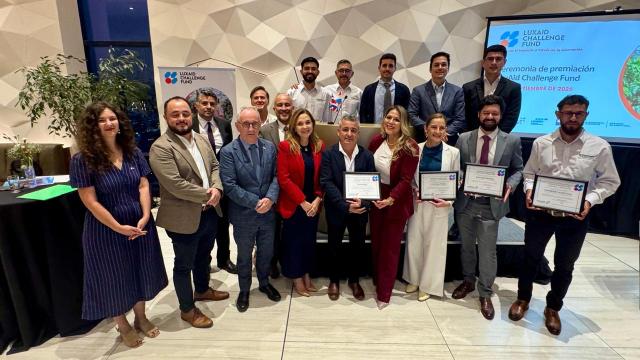
LuxAid Challenge Fund selects four Costa Rican companies to boost innovative agritech solutions
LuxAid Challenge Fund selects four Costa Rican companies to boost innovative agritech solutions

