Economic development: the foundation of inclusive prosperity

Through an integrated approach that simultaneously addresses access to finance, the structuring of entrepreneurial ecosystems and the mobilisation of responsible capital, LuxDev contributes to the creation of sustainable economic opportunities for all.
Supporting women’s entrepreneurship in Latin America
In order to strengthen local development and women’s economic empowerment in Latin America, LuxDev implements complementary initiatives aimed at improving their access to finance and business development services. Rolled out across the eight member countries of the Central American Integration System (SICA), these interventions follow a continuum approach combining technical support, financial instruments and the structuring of public policies.
The Female Entrepreneurship Fund (FEF), an impact investment fund based in Luxembourg, is a central lever of this approach. Through the Contribution to the FEF project and thanks to a catalytic investment of EUR 4 million from the Luxembourg government, LuxDev mobilises private funding for regional financial institutions, enabling them to develop products better suited to the needs of women-led SMEs. At the same time, the FEF’s technical assistance facility strengthens the capacity of beneficiary institutions to integrate a gender perspective and to support their women-led SMEs clients, notably in management.

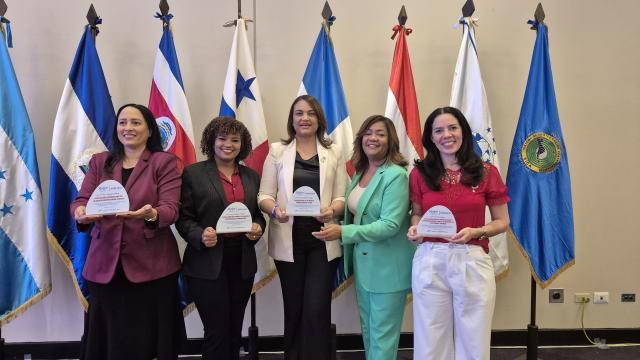
These instruments complemented and strengthened the Regional programme for the promotion of women’s entrepreneurship, implemented in partnership with the Regional Centre for the Promotion of Micro, Small and Medium-sized Enterprises between 2021 and 2025. This programme supported 1,020 women and led to the collective development of a regional strategy to promote women’s entrepreneurship. Adopted at the end of 2025, this document enhances the coherence and coordination of public policies in the region.
Formulated in the same year, the Regional programme for strengthening women’s entrepreneurship builds on these achievements. It aims to consolidate an inclusive, digitally supported and environmentally sustainable entrepreneurial ecosystem by enhancing the capacities, networks and access to finance and markets of women entrepreneurs in the SICA region.
-
Closed Latin America and the Caribbean
Regional Programme for the Promotion of Women's Entrepreneurship - Phase II
Socio-economic development
Regional Programme for the Promotion of Women's Entrepreneurship - Phase II -

In execution Latin America and the Caribbean
Regional programme for strengthening women's entrepreneurship - Phase III
Education, vocational training and employment
Regional programme for strengthening women's entrepreneurship - Phase III


Success: from beneficiary to mentor
María Gabriela SANABRIA is the founder and director of Green Supply, an SME that uses plant enzymes as biological catalysts in cleaning products and biostimulants. Strengthening her production chain, securing funding and forging strategic alliances with key institutions had become essential to ensure her business’s growth. To achieve this, she took part in the acceleration process offered under the Regional programme for the promotion of women’s entrepreneurship.
Thanks to a comprehensive assessment, she was able to analyse the positioning of her products and identify opportunities within the value chain. At the same time, the programme provided her with key tools to prepare for investment, teaching her how to interpret her key financial statements and maximise her profitability. María Gabriela also honed her ability to pitch her business, enabling her to present it effectively to potential investors.
As a result, she has not only been able to strengthen Green Supply’s capacities and establish strategic alliances with institutions such as Costa Rica’s Ministry of Economy, Industry and Trade, but has also become a source of support for other women entrepreneurs. As a dedicated mentor, she promotes the empowerment of women launching their own initiatives, thereby amplifying the programme’s impact.
Accelerating the development of sustainable finance in Rwanda
In Rwanda, LuxDev promotes the development of sustainable finance as a key lever for inclusive economic growth and the implementation of national climate commitments. The Support to the Kigali International Finance Centre project contributes to the country’s ambition to position itself as a regional financial hub capable of mobilising investments aligned with sustainability objectives. It focuses in particular on strengthening human capital in the financial sector, fostering sustainable finance, supporting bankable businesses – especially SMEs – and driving financial innovation.
In 2025, a major milestone was reached with the launch of the Green Exchange Window (GEW) by the Rwanda Stock Exchange. Developed in partnership with the Luxembourg Stock Exchange, this platform provides a transparent framework that complies with international standards for raising capital to finance environmental and social projects. The GEW is complemented by initiatives to build issuers’ capacity, such as the RSE Investment Clinic, which improves companies’ readiness to access capital markets. Thanks to this integrated approach, a company supported in 2025 successfully issued a bond worth EUR 2.9 million.
At the same time, LuxDev manages the Grand Duchy of Luxembourg’s contribution to Intego, Rwanda’s NDC facility, an instrument launched with financial support from the Kreditanstalt für Wiederaufbau and subsequently bolstered by other partners. Managed by the Rwanda Green Fund, Intego aims to accelerate the implementation of Rwanda’s nationally determined contribution (NDC) by financing public projects for climate change mitigation and adaptation. To date, the capital mobilised has financed initiatives to combat soil erosion, restore wetlands and develop renewable energy.

Increasing the profitability of the agricultural sector
In order to strengthen the profitability of the agricultural sector and enhance its economic attractiveness, LuxDev supports complementary initiatives aimed at improving access to finance, reducing the risks faced by producers, and boosting the competitiveness of agricultural value chains. These interventions help to address persistent constraints – such as exposure to climate risks, and weak technical and financial capacity – which limit the incomes of farmers and small agri-food businesses.
At the international level, the Agency supports notably the Smallholder SustaiNability Upscaling Programme (SSNUP) – Phase II, a multi-donor project aimed at improving the living conditions of smallholder farmers by strengthening their resilience, incomes and productivity. The approach adopted by SSNUP is based on co-financing technical assistance projects linked to impact investors active in the agricultural and rural finance sectors. These projects cover a wide range of interventions, from the development of index-based insurance services to the promotion of agro-ecological farming practices.

In Benin, the Inclusive and innovative finance programme supports the implementation of the 2023–2027 National Financial Inclusion Strategy by primarily targeting stakeholders in agricultural value chains, young people and women. Although agricultural insurance is a recognised tool for managing climate-related risks – to which producers are increasingly exposed – Benin had lacked an appropriate offer since 2017.
In this context, the programme, together with the NGO ADA Luxembourg, provided structured support for the institutionalisation of index-based agricultural insurance, in partnership with the National Agricultural Development Fund. In 2025, 95,056 producers in the cotton, rice and livestock value chains benefited from a subsidy covering 80% of insurance premiums, thanks to a joint effort by the Beninese government, Luxembourg Development Cooperation and Swiss Development Cooperation. This scheme significantly reduces farmers’ exposure to climate risks, thereby strengthening the resilience of the agricultural sector.

Gallery viewer


Focus: stimulating growth through an integrated approach
In Kosovo, the Sustainable and inclusive growth project forms part of a cross-cutting approach aimed at supporting innovation, inclusion and social development to build a greener, fairer and more innovative economy. In partnership with several key institutions – including the Office of the Prime Minister for the Sovereign Fund, the Kosovo Investment and Enterprise Support Agency, sectoral ministries and the Assembly of Kosovo – it encourages local and foreign investment within a secure and transparent framework, with the objective of stimulating job creation and, ultimately, improving public finances.
In 2025, the project contributed to the development of the National Innovation Strategy 2030+, involving more than 40 stakeholders from public institutions, the private sector, academia and civil society.
This strategy aims to structure and coordinate Kosovo’s innovation ecosystem. In the medium and long term, it is expected to improve the coherence of innovation policies, promote the deployment of structured innovation instruments, stimulate private-sector innovation, increase uptake of research and development, and support the establishment of sustainable funding mechanisms. The associated action plan will be drawn up in 2026, the year the project concludes.
A second phase, formulated in 2025, will build on these efforts by strengthening governance, cybersecurity, digital resilience and support for innovation and research, with a view to sustainably consolidating Kosovo’s economic competitiveness.
-

In execution Kosovo
Sustainable and inclusive growth in Kosovo
Socio-economic development
Sustainable and inclusive growth in Kosovo -

In formulation Kosovo
Sustainable and inclusive growth in Kosovo
Socio-economic development


Gallery viewer


