Supporting civil society as a driver of inclusivity
© Arben LLAPASHTICA

Civil society organisations (CSOs) play a key role in promoting citizen participation, defending rights and ensuring the inclusion of marginalised groups. In 2025, LuxDev intensified its support to strengthen their organisational structure, autonomy and capacity to operate in sometimes fragile environments.
Expanding opportunities for the integration of marginalised groups in Kosovo
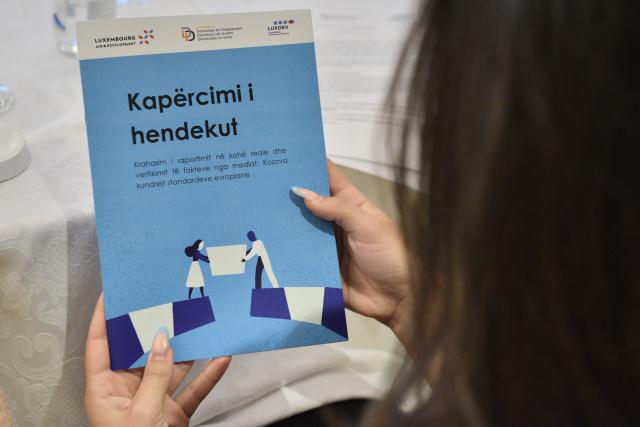
In Kosovo, the civil society support project aims to strengthen democratic participation and social cohesion by supporting partner organisations working to empower women, promote the inclusion of underrepresented communities, foster social entrepreneurship, and develop a more transparent media landscape.
In 2025, it partnered with the Jakova Innovation Center to implement the Community-driven social innovation programme, an initiative designed to address the lack of institutional support mechanisms for the social enterprise sector. One hundred and nine participants — more than half from underrepresented groups and 68% women — benefited from tailored training, mentoring and technical assistance to transform their ideas into viable social enterprises. Six initiatives progressed towards official registration, demonstrating local capacities to tackle the region’s challenges.
A second phase of the project, under formulation in 2025, will build on these efforts. It will strengthen human rights, gender equality, and the inclusion of marginalised groups by reinforcing the role of CSOs and the media in democratic governance.
-

In execution Kosovo
Support to civil society in Kosovo
Governance
Support to civil society in Kosovo -
In formulation Kosovo
Strengthening civil society participation and social inclusion in Kosovo
Governance


Gallery viewer


Countering the shrinking of civic space in Africa and Latin America
The year 2025 was marked by the formulation of three new interventions designed to reinforce civil society in contexts characterised by institutional change, political tensions, or a shrinking civic space. All share a common objective: to consolidate and structure CSOs, facilitate their access to funding, and encourage networking, enabling them to fully play their role.
Co-funded by the European Union and Luxembourg, the Support to civil society in Benin project promotes citizen participation in the sectors of good governance, human rights, and equitable access to services in the departments of Borgou, Atlantique, and Littoral. It fosters dialogue between umbrella CSOs and public authorities and funds advocacy initiatives, particularly in support of the rights of sexual and gender minorities.
Two other interventions, pursuing similar objectives but adopting a regional approach, were developed in the Sahel and Latin America. Covering Senegal, Mali, Burkina Faso and Niger on the one hand, and Costa Rica and Guatemala on the other hand, they combine capacity building for CSOs, direct financial support, and networking with regional and international institutions, in order to help preserve an essential civic space and promote more inclusive governance.

Supporting migration dynamics in Costa Rica
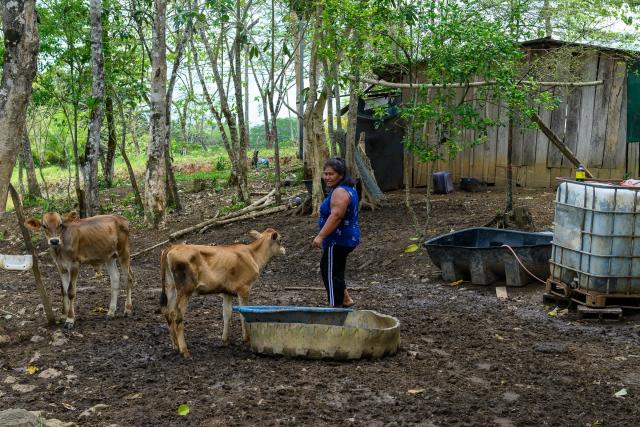
In Costa Rica, the Migration, social cohesion, economic integration and governance (CONVIVE) project also aims to promote a society open to all by specifically contributing to improving the quality of life and the socio-economic integration of migrants, refugees, and asylum seekers. The project operates in a context of increasing migration flows, aiming to simplify administrative procedures, optimise public services, and implement social protection measures to ensure access to economic resources, basic services, justice, and productive and decent employment for all, particularly the most vulnerable.
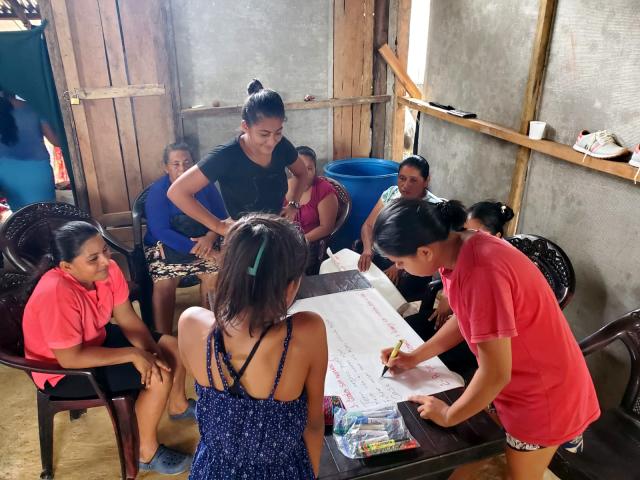
In the north of the country, the Regional technical assistance fund provided direct support to a community of Nicaraguan refugees living in precarious housing conditions. Through an approach combining collaboration with a local NGO and direct interventions, LuxDev helped equip and refurbish 14 housing units, allowing 59 people to settle in decent accommodation with electricity and basic furniture. Beyond improving living conditions, this initiative represents a decisive step towards the sustainable social and economic integration of the beneficiaries.
-
In execution Costa Rica
CONVIVE - Migration, social cohesion, economic integration and governance
Governance
CONVIVE - Migration, social cohesion, economic integration and governance -
Closed Latin America and the Caribbean
Regional technical assistance fund in Central America
Others
Regional technical assistance fund in Central America


Solidarity mutuals: support for survivors in the Democratic Republic of the Congo
At the crossroads of all these challenges, the Support to the hospital and the Panzi Foundation project contributes not only to the physical and emotional recovery of women victims of sexual violence in the Democratic Republic of the Congo, but also to the rebuilding of their livelihoods and their access to justice.
In addition to providing medical and psychosocial care, since 2023, the Panzi Foundation has been rolling out solidarity mutuals, a community-based mechanism that enables survivors to save together, access small loans, and restart economic activities. In 2025, 141 beneficiaries surveyed reported very encouraging results: the mutual enabled them to start small businesses, improve their harvests, or manage urgent expenses. Beyond their economic impact, these groups offer a safe space where women who are often stigmatised or isolated can support one another and regain confidence. Since their launch, the solidarity mutuals have strengthened the resilience, dignity, and self-esteem of more than 1,350 women.